Farm name: The Putney Common, Green Commons of Vermont
Acreage: 1.03 acres
Location: Putney, VT
Method of Access: Ownership and conservation easement
Year Founded: 2025 under current ownership; Putney Farmers Market and Community Garden formed in 2010
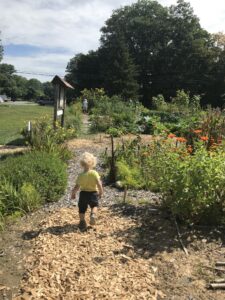
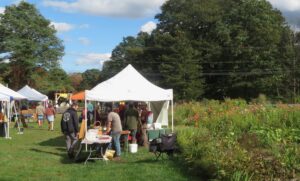
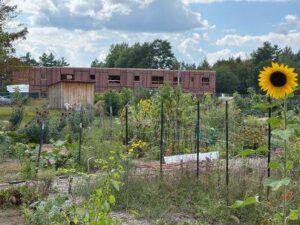
Farm Operation: Community garden, farmers market
A Case Study in Community Land Ownership
Set in the southern part of Vermont, the small town of Putney boasts a farmer’s market and community garden. Both seasonal ventures previously had tenuous land tenure, but after six years of hard work, Green Commons of Vermont owns the land on which these community assets operate.
Green Commons is a nonprofit organization that was formed to own, conserve, and manage the land hosting the farmers market and community garden. This 1.03 acres of land is known as the Putney Common. In spring 2025, Green Commons purchased Putney Common and contracted with the Vermont Housing and Conservation Board (VHCB) to place a conservation easement on the land.
The process Green Commons went through to own and conserve Putney Common included negotiating with numerous stakeholders, overcoming conflict and roadblocks, and learning lessons that can help other similarly situated organizations and farmers secure land tenure. The keys to success that other organizations could learn from were persistence, access to legal counsel, community buy-in, remembering the goal, and partnering with a local land trust.
HISTORY OF THE LAND
Putney Common has long been an open green space. In 1926, George Aiken, who later become governor of Vermont and then a U.S. senator, established the nation’s first wildflower nursery on the parcel. Old wildflower bushes still adorn the property.
In 2009, Transition Putney (TP) started the farmer’s market and community garden on the former nursery’s land. TP was the local chapter of a national grassroots organization intent on building community resiliency. After TP dissolved, members of the community took over management of both the market and garden. Bylaws were created for each entity, and the two ventures assumed unincorporated association status.
However, the community did not own the land. As with all gardens and markets, operating without stable land tenure makes them vulnerable. By the end of 2009, the land was owned by Gateway Associates, a collection of six local families who were interested in developing the property. The community garden and farmer’s market maintained a letter of understanding—and a low rental fee—with Gateway Associates, with the understanding that the land might be sold.
GREEN COMMONS FORMATION
In 2018, Gateway Associates reached out to the Brattleboro based Windham and Windsor Housing Trust (WWHT) to initiate an affordable housing project on the land. Elizabeth Bridgewater, WWHT’s executive director, contacted the community garden, hoping the projects could co-exist. Joint meetings regarding the project began with a spirit of collaboration and willingness to work together as partners.
Green Commons of Vermont filed articles of incorporation with Vermont in June 2020 to manage the land and lease the property to the farmer’s market and community garden. The founders were mostly volunteers who worked with a board of five directors. “We all do whatever needs doing,” says Tom Deshaies, President of Green Commons. They planned to raise the money needed to buy the land used by the community garden and farmer’s market (Putney Common) from WWHT. To do so, the founders obtained 501(c)(3) nonprofit status, which was crucial when applying for grants. (See here for non-profit corporation’s by-laws.)
*****
Green Commons needed legal assistance to move forward with the project. Jeff Bernstein, a skilled nonprofit and land use attorney in Vermont, was introduced to Green Commons by the Vermont Legal Food Hub, a network of attorneys who work pro bono for food and farm businesses throughout New England. Jeff worked with Green Commons for five years. He attended meetings and provided legal advice regarding the organization’s 501(c)(3) application, the sale of a conservation easement on Putney Common to VHCB, the temporary lease of the property from WWHT, and the purchase of the Putney Common. Affording legal counsel may be a barrier for newly formed organizations like Green Commons, so finding an established attorney to provide advice and do this work contributed to their success. Tom and Louise Garfield, directors at Green Commons, stated that this project would not have been possible without Jeff’s legal expertise and assistance. Building their relationship with Jeff was critical to the project’s success.
*****
The planning stages of the WWHT/Green Commons collaboration were promising. The two organizations spent two years designing and reviewing options for the housing development and the community garden and farmer’s market. They decided on a plan that expanded the land for Putney Commons by .18 acre for additional community space. At this point, it was critical for WWHT to work with Green Commons to get community buy-in.
Around that time, WWHT informed Green Commons that soil testing revealed the land had heavy clay content and would cause drainage issues for the housing project, so the only feasible plan would be one where all the affordable housing units would be on the parcel immediately adjacent to the community garden and farmer’s market.
Because this was different from the original plans, it created conflict between the two organizations and was not fully resolved until WWHT was able to purchase the land from Gateway Associates and move forward with the project (after the lawsuits discussed below were dismissed).
LAWSUITS STALL AFFORDABLE HOUSING PROJECT
As is common in many communities, there was division over the affordable housing project. Some people were in support, while a handful of community members were actively fighting it in court. Some of the community members who opposed the project were also part of the community garden. The division created a level of distrust between some stakeholders.
Ultimately, the Vermont Supreme Court heard two cases against WWHT. Both turned on the definition of “contiguous parcel.” WWHT prevailed in both cases.
In the first case, a neighbor argued that since there were three lots, one of which was separated by a road, the housing development was not on contiguous land and could not be considered as “one parcel” for purposes of being exempt from state permitting requirements. Under Vermont law, a planned residential development (PRD) needs to be on one parcel in order to be exempt. However, Putney’s zoning code and the town’s development board allowed PRDs to be on multiple lots. Therefore, the court ruled in favor of WWHT.
In the second case, another neighbor argued that the plan should be reviewed under Act 250 and should not be considered a priority housing plan since it was not on a contiguous parcel. Act 250 is Vermont’s overarching zoning scheme that restricts development, but it does not apply to priority housing projects. The Supreme Court held that contiguous lots do not need to physically touch each other; WWHT’s parcels were owned by the same entity and were being developed under the same project rubric. Therefore, the Court held the project should remain exempt from Act 250 review.
Green Commons was not involved in any of the lawsuits but remained supportive of WWHT’s plan.
After final decisions were rendered in the lawsuits, in September 2023, WWHT finally was able to purchase the property for both the affordable housing project and Putney Common from the Gateway Group.
*****
According to Tom and Louise, one of the challenges of this project was coordinating diverse values and desires for the property. Key to its success was persistence. “Often, things fall apart and come back together with these long-term projects,” says Jeff Bernstein, Green Commons’ legal counsel.
“When we started this project, we were like deer in the headlights. But people just show up and they start helping. It’s amazing how much people are willing to help you out,” says Tom. “Vermont is a special place full of community spirit.”
Additionally, Tom provided advice for managing conflicts within organizations. “As soon as tensions start to come up, get out from behind the keyboard. It’s easier to settle things in person instead of online.”
THE PATH TO OWNERSHIP BY GREEN COMMONS
WWHT initially planned to sell Putney Common to Green Commons, but that did not happen right away, so a lease was executed in February 2024 that included an option for Green Commons to buy the Putney Common from WWHT. The organization faced challenges paying the monthly rent, which covered the property taxes. The community provided support with the Putney Co-op grocery store (located next door), the farmer’s market, individual community gardeners, and Green Commons board members providing several months of rent. These existing relationships helped sustain Green Commons while it secured its 501(c)(3) status and began fundraising.
Before Green Commons received its 501(c)(3) status, Vermont Land Trust (VLT) and Green Commons were collaborative partners, and VLT helped broker conversations between Green Commons and the Vermont Housing and Conservation Board (VHCB) about placing a conservation easement on the property. The parties ultimately reached an agreement to do so, with VHCB agreeing to pay for the conservation easement and grant Green Commons the balance needed to purchase the property. (See here for the conservation easement that was signed by the parties.)
“VHCB normally funds 66 percent of projects, but they funded 100 percent of what we needed for the land purchase.” said Tom. VHCB provided additional funding because the project included both housing and conservation. Green Commons purchased the Putney Commons on May 14, 2025; they were finally owners of the land.
MOVING FORWARD
The future of Green Commons is bright. Green Commons owns the land on which the market and gardens operate, and that land is conserved in perpetuity.
Louise sees a lot happening in the Putney Common over the next few years, including a natural play space for kids, native plantings and accessible gathering places for relaxation and events. The acre provides much needed green open space in the center of Putney.
Both Green Commons and WWHT represent partners in a successful example of a dual-purpose affordable housing and conservation project, managed by different entities. Perhaps this method of land access can be used by other organizations looking to develop affordable housing and preserve open green space, accessible to all ages and abilities.